
Introduction: Why Lyft Drivers Must Understand Their Insurance Coverage
Driving for Lyft offers flexibility and income opportunities, but it also introduces insurance complexities that many drivers underestimate. Lyft advertises that it provides insurance coverage for drivers, which often leads to confusion about whether additional protection is necessary.
To drive responsibly and legally, drivers must clearly understand how Lyft’s insurance works, where it applies, and where it does not. This article provides a comprehensive breakdown of Lyft driver insurance coverage explained, with a strong focus on how Rideshare Insurance fills critical gaps that platform coverage leaves behind.
How Lyft’s Insurance Model Is Structured
Lyft’s insurance structure is built around different driving phases, each with distinct coverage levels. While this model mirrors Uber’s framework, the details matter—especially when accidents occur.
Lyft’s coverage applies only when the app is actively in use and varies based on driver status.
Lyft Driving Periods and Insurance Coverage
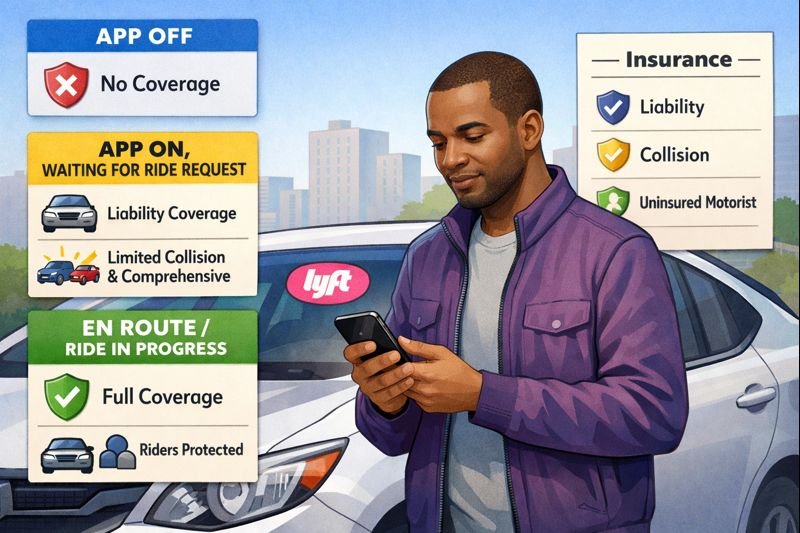
Period 0: App Off
When the Lyft app is turned off, Lyft provides no insurance coverage. Drivers rely entirely on their personal auto insurance policy.
Any accident occurring during this time is treated as personal use.
Period 1: App On, Waiting for a Ride Request
This is where confusion—and risk—often begins.
During this period, Lyft provides limited liability coverage, generally up to:
-
$50,000 per person for bodily injury
-
$100,000 per accident
-
$25,000 for property damage
However, no collision or comprehensive coverage applies unless the driver has personal insurance that explicitly allows rideshare use or carries a rideshare endorsement.
Periods 2 and 3: En Route to Pick Up or Transporting a Passenger
Once a ride is accepted, Lyft provides more substantial coverage, often including:
-
Up to $1 million in third-party liability
-
Contingent comprehensive and collision coverage (subject to a deductible)
Despite higher limits, this coverage is conditional and does not replace a driver’s own insurance obligations.
Where Lyft Insurance Falls Short
Understanding Lyft driver insurance coverage explained requires acknowledging its limitations. Lyft’s insurance does not:
-
Cover vehicle damage during Period 1
-
Protect against personal policy exclusions
-
Guarantee claim approval without disputes
-
Cover every scenario involving uninsured or underinsured motorists
As a result, drivers without rideshare insurance may find themselves exposed during some of the most common accident scenarios.
The Role of Rideshare Insurance for Lyft Drivers
Rideshare Insurance is designed to bridge the gap between personal auto insurance and Lyft’s platform coverage. It ensures continuous protection across all driving periods.
Key benefits include:
-
Coverage during app-on waiting periods
-
Reduced claim disputes between insurers
-
Protection against policy cancellation
-
Compliance with state insurance laws
For many drivers, a rideshare endorsement is the only way to ensure uninterrupted coverage.
Accident Scenarios: With and Without Rideshare Insurance
Without Rideshare Insurance
A Lyft driver is waiting for a ride request and causes a minor accident. Lyft’s liability coverage applies to the other party, but the driver’s own vehicle damage is not covered. The personal insurer denies the claim due to commercial use.
With Rideshare Insurance
The same accident occurs, but the rideshare endorsement activates. The driver’s vehicle is covered, and claims are processed without coverage disputes.
These real-world scenarios highlight why rideshare insurance is not merely optional.
Common Misunderstandings About Lyft Insurance
“Lyft Covers Me at All Times”
False. Coverage only applies when the app is on and varies by period.
“My Personal Insurance Will Step In”
Only if the policy allows rideshare activity, which many do not.
“Rideshare Insurance Is Redundant”
In reality, it is complementary—not duplicative.
How Rideshare Insurance Aligns With State Regulations
Many states require drivers to maintain coverage during all app-on periods. Rideshare insurance helps drivers:
-
Meet minimum liability requirements
-
Provide proof of coverage if requested
-
Avoid regulatory penalties
Lyft’s coverage alone may not satisfy all state-level requirements.
Choosing the Right Coverage as a Lyft Driver
Drivers should evaluate:
-
Frequency of driving
-
State insurance requirements
-
Deductible tolerance
-
Vehicle value
Full-time drivers typically benefit more from comprehensive rideshare coverage, while part-time drivers still need protection during Period 1.
Cost Considerations for Lyft Drivers
Adding rideshare insurance is often more affordable than expected. In many cases, the cost is significantly lower than the potential financial exposure from a single uncovered accident.
Cost variables include:
-
Driving history
-
Location
-
Insurer underwriting rules
The value lies not in price, but in risk mitigation.
Why Lyft Drivers Should Not Rely Solely on Platform Coverage
Platform insurance is designed to protect Lyft as a company—not to fully protect individual drivers. Coverage limits, deductibles, and conditions are structured to minimize corporate risk.
Rideshare Insurance shifts protection back to the driver, ensuring personal financial security.
Conclusion: Understanding Lyft Insurance Is Only the First Step
A clear understanding of Lyft driver insurance coverage explained reveals a simple truth: platform insurance alone is not enough for most drivers.
Rideshare Insurance provides continuity, clarity, and compliance, protecting drivers across every phase of Lyft activity. For drivers who want to operate professionally, legally, and with confidence, rideshare insurance is an essential component of their overall protection strategy.