
Introduction: Why This Comparison Matters for Rideshare Drivers
One of the most common and costly mistakes Uber and Lyft drivers make is assuming that personal auto insurance automatically covers rideshare driving. At first glance, personal auto insurance and rideshare insurance may seem similar—both protect drivers and vehicles. However, they are designed for fundamentally different types of risk.
Understanding personal auto insurance vs rideshare insurance is essential for any driver who wants to avoid claim denials, policy cancellations, and financial exposure. This article breaks down the differences in coverage, legal treatment, cost, and real-world consequences so drivers can choose the right protection with confidence.
What Personal Auto Insurance Is Designed to Cover
Personal auto insurance is intended for private, non-commercial use of a vehicle. It typically covers activities such as commuting, running errands, and personal travel.
Standard personal auto policies generally include:
-
Liability coverage
-
Collision coverage
-
Comprehensive coverage
-
Medical payments or personal injury protection
However, nearly all personal auto policies include a commercial use exclusion, meaning they do not cover activities involving paid transportation of passengers.
How Rideshare Driving Changes Insurance Risk
Driving for Uber or Lyft transforms a personal vehicle into a revenue-generating asset. From an insurer’s perspective, this introduces:
-
Increased time on the road
-
Higher exposure to accidents
-
Greater liability due to passengers
-
Elevated claim frequency and severity
Because of these factors, insurers treat rideshare driving as a separate risk category that personal auto insurance was never priced or structured to handle.
What Is Rideshare Insurance?
Rideshare Insurance is a specialized coverage designed to bridge the gap between personal auto insurance and the limited insurance provided by Uber and Lyft.
It is typically offered as:
-
A rideshare endorsement added to a personal policy, or
-
A hybrid policy combining personal and commercial elements
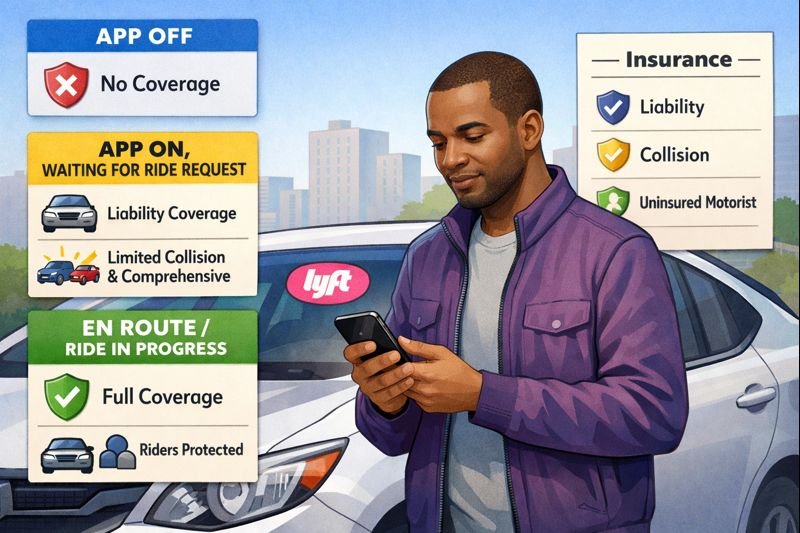
The primary purpose of rideshare insurance is to provide coverage during app-on waiting periods, when personal insurance often excludes coverage and platform insurance is limited.
Personal Auto Insurance vs Rideshare Insurance: Coverage Comparison
Coverage Scope
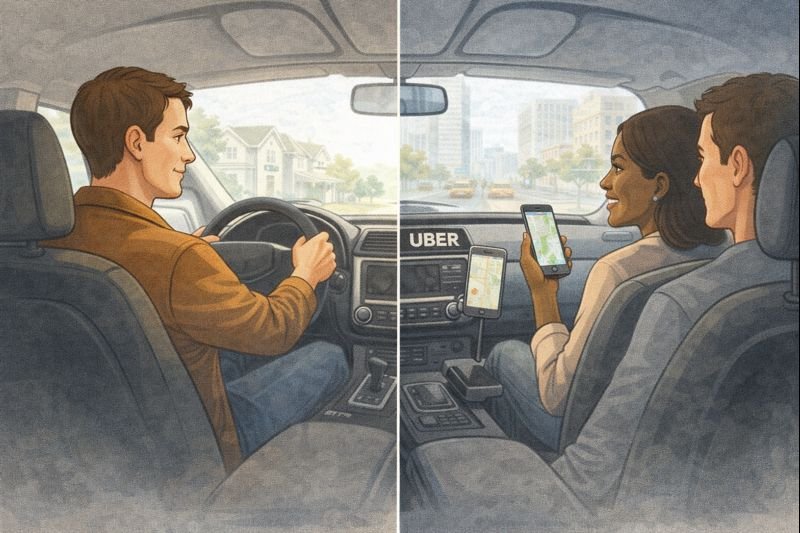
Personal auto insurance applies only when the vehicle is used for private purposes. Rideshare insurance extends coverage to rideshare-related activity.
App-On Period Protection
Personal auto insurance usually does not cover accidents that occur while waiting for a ride request. Rideshare insurance specifically covers this gap.
Claim Acceptance
Claims involving rideshare activity are often denied under personal auto insurance. Rideshare insurance reduces the risk of claim disputes.
Legal Compliance
Many states require coverage during all rideshare driving phases. Rideshare insurance helps meet these legal obligations.
Real-World Claim Scenarios
Scenario 1: Accident Without Rideshare Insurance
A driver is logged into a rideshare app and waiting for a request when an accident occurs. The personal insurer denies the claim due to commercial use, and platform coverage is limited.
Scenario 2: Accident With Rideshare Insurance
The same accident occurs, but the rideshare endorsement activates, covering vehicle damage and liability without dispute.
These scenarios illustrate why the distinction between personal auto insurance and rideshare insurance is more than technical—it is financial.
Cost Comparison: Is Rideshare Insurance Significantly More Expensive?
One common concern is cost. In most cases, rideshare insurance is far more affordable than drivers expect.
While personal auto insurance alone may be cheaper, it carries hidden risk. Rideshare insurance adds a modest premium increase in exchange for substantial protection.
When comparing personal auto insurance vs rideshare insurance, drivers must evaluate not just monthly cost, but total financial exposure.
Policy Cancellation and Non-Disclosure Risks
Failing to disclose rideshare activity can lead to:
-
Policy cancellation
-
Claim denial
-
Difficulty obtaining future coverage
-
Higher long-term premiums
Rideshare insurance allows drivers to disclose activity openly without fear of penalty.
State Law and Regulatory Considerations
Many states regulate rideshare activity under Transportation Network Company laws. These laws often require drivers to maintain coverage during all app-on periods.
Personal auto insurance alone may not satisfy these requirements, even if no accident occurs.
When Personal Auto Insurance May Be Sufficient
Personal auto insurance may be sufficient only when:
-
The rideshare app is completely off
-
The vehicle is used solely for personal purposes
-
The driver does not accept rideshare trips
The moment the app is turned on, rideshare insurance becomes relevant.
Who Needs Rideshare Insurance the Most?
Rideshare insurance is particularly important for:
-
Drivers who operate frequently
-
Drivers in high-traffic urban areas
-
Drivers with valuable vehicles
-
Drivers in states with strict insurance laws
However, even occasional drivers face exposure during every app-on session.
Choosing the Right Coverage Strategy
Drivers should consider:
-
State insurance requirements
-
Driving frequency
-
Vehicle value
-
Risk tolerance
For most Uber and Lyft drivers, combining personal auto insurance with a rideshare endorsement offers the best balance of cost and protection.
Conclusion: Making the Right Insurance Choice
The comparison of personal auto insurance vs rideshare insurance makes one conclusion unavoidable: personal auto insurance alone is not enough for rideshare drivers.
Rideshare Insurance provides critical coverage where personal policies stop, protecting drivers from claim denials, legal risk, and financial loss. For drivers who rely on Uber or Lyft income—or simply want peace of mind—rideshare insurance is an essential part of responsible driving.