Introduction: Why This Question Matters So Much to Uber Drivers
One of the most searched questions among Uber drivers is deceptively simple: do I need rideshare insurance if Uber provides coverage? Uber’s messaging can make it seem like drivers are fully protected, leading many to assume additional insurance is unnecessary.
However, insurance coverage is rarely that straightforward. Uber’s policy is structured to protect the platform first, not individual drivers. Understanding how Uber’s coverage works—and where it stops—is essential for avoiding costly misunderstandings.
This article breaks down Uber’s insurance in plain terms and explains why Rideshare Insurance remains critical for most drivers.
Short Answer: Yes, Most Uber Drivers Still Need Rideshare Insurance
While Uber does provide insurance, it does not cover every driving situation. Coverage varies by driving phase, includes significant limitations, and often leaves drivers exposed during common scenarios.
Rideshare insurance is designed to close these gaps and ensure continuous protection.
What Uber’s Insurance Actually Covers
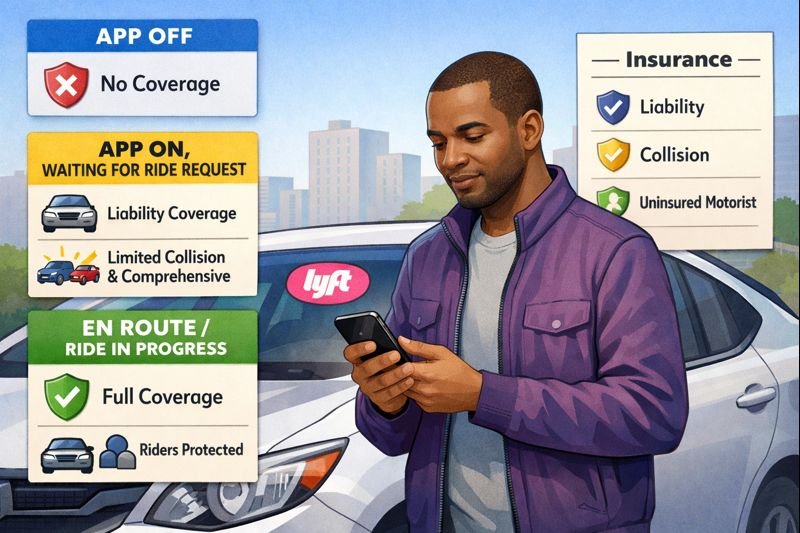
Uber’s insurance policy activates only when the app is turned on. Coverage depends on the driver’s status within the app.
App Off: No Uber Coverage
When the app is off, Uber provides no insurance. Only personal auto insurance applies.
App On, Waiting for a Ride (Period 1)
Uber provides limited liability coverage, typically:
-
$50,000 bodily injury per person
-
$100,000 bodily injury per accident
-
$25,000 property damage
There is no coverage for your own vehicle damage during this period.
En Route or Transporting a Passenger (Periods 2 & 3)
Uber provides up to $1 million in liability coverage, along with contingent collision and comprehensive coverage—usually with high deductibles.
Where Uber’s Coverage Falls Short
Understanding do I need rideshare insurance if Uber provides coverage requires examining what Uber’s policy does not cover.
Uber’s insurance may not cover:
-
Vehicle damage during waiting periods
-
All uninsured or underinsured motorist losses
-
Policy disputes between insurers
-
Personal insurer exclusions
-
Full legal defense costs
Even when coverage applies, high deductibles can create significant out-of-pocket expenses.
Why Rideshare Insurance Is Still Necessary
Rideshare Insurance fills the coverage gaps that Uber’s policy leaves behind. It is specifically designed to work alongside Uber’s insurance, not replace it.
Key benefits include:
-
Coverage during app-on waiting periods
-
Protection against claim denials
-
Lower risk of policy cancellation
-
Clear compliance with state laws
For most drivers, rideshare insurance provides continuity and certainty.
Real-World Accident Examples
Example 1: Accident While Waiting for a Ride
A driver is logged into Uber but has not yet accepted a trip. An accident occurs. Uber’s limited liability coverage applies to the other party, but the driver’s vehicle is not covered. Personal insurance denies the claim.
Example 2: At-Fault Collision With High Costs
Uber’s coverage applies, but medical bills exceed policy limits. The driver may be personally liable for excess damages.
In both cases, rideshare insurance reduces financial exposure.
Common Myths About Uber Insurance Coverage
Myth 1: “Uber Covers Me Completely”
Coverage is conditional and limited.
Myth 2: “I Can Rely on My Personal Insurance”
Many personal policies exclude rideshare use.
Myth 3: “I’ll Add Coverage After an Accident”
Insurance cannot be added retroactively.
State Laws and Legal Responsibilities
Many states require drivers to maintain coverage during all rideshare activity periods. Uber’s policy alone may not satisfy these requirements.
Rideshare insurance helps drivers:
-
Meet legal minimums
-
Provide proof of coverage
-
Avoid regulatory penalties
Legal compliance is a driver’s responsibility, not Uber’s.
When Uber Coverage Might Be Enough
Uber’s coverage may be sufficient only if:
-
You never drive during waiting periods
-
Your personal insurer allows rideshare use
-
You accept the risk of uncovered scenarios
For most drivers, these conditions are unrealistic.
Cost vs Risk: The Real Decision Drivers Face
The decision is not whether Uber provides coverage, but whether that coverage is sufficient.
Rideshare insurance typically costs far less than:
-
Vehicle repairs
-
Medical bills
-
Legal fees
-
Lost income
From a risk management perspective, rideshare insurance offers strong value.
How to Decide If You Need Rideshare Insurance
Drivers should consider:
-
How often they drive
-
State insurance requirements
-
Vehicle value
-
Personal risk tolerance
In most cases, the answer to do I need rideshare insurance if Uber provides coverage is yes.
Conclusion: Uber Coverage Is Not a Replacement for Rideshare Insurance
Uber’s insurance is a helpful layer of protection—but it is not comprehensive. It contains gaps, limitations, and conditions that can expose drivers to significant financial risk.
Rideshare Insurance ensures continuous protection across all driving periods, reduces claim disputes, and supports legal compliance. For Uber drivers who want certainty, stability, and peace of mind, rideshare insurance remains essential—even when Uber provides coverage.