
Introduction: Why Rideshare Insurance Is a Critical Topic for Uber Drivers
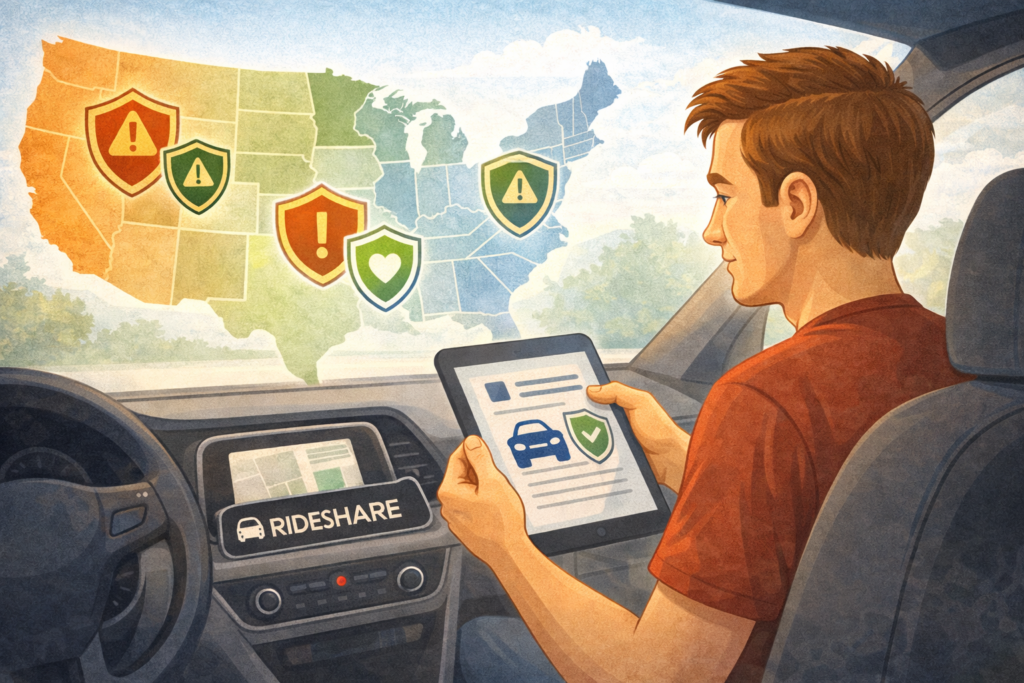
The rise of the gig economy has transformed personal vehicles into income-generating assets. For millions of Americans driving for Uber, the line between personal and commercial use of a vehicle has become increasingly blurred. This shift has created a major insurance gap—one that traditional auto insurance policies were never designed to handle.
Rideshare Insurance exists to close that gap. Yet many new and even experienced Uber drivers still ask the same fundamental question: what is rideshare insurance and do Uber drivers need it? The answer is not always intuitive, especially since Uber itself advertises that it provides insurance coverage.
This article offers a clear, professional, and legally grounded explanation of rideshare insurance, why it exists, how it works, and whether Uber drivers truly need it to protect themselves financially and legally.
What Is Rideshare Insurance?
Rideshare Insurance is a specialized type of auto insurance coverage designed specifically for drivers who use their personal vehicles to transport passengers through ridesharing platforms such as Uber or Lyft.
Unlike standard personal auto insurance, rideshare insurance recognizes that drivers operate in multiple driving “phases,” some of which are excluded from traditional policies. Its primary purpose is to provide continuous coverage during periods when a driver is logged into a rideshare app but not actively transporting a passenger.
In most cases, rideshare insurance is offered as:
-
An endorsement (add-on) to a personal auto insurance policy, or
-
A hybrid policy that combines personal and commercial coverage elements
This coverage ensures that drivers are not left uninsured during critical moments when accidents are most likely to occur.
Why Personal Auto Insurance Is Not Enough for Uber Drivers
Most personal auto insurance policies in the United States include a commercial use exclusion. This means that if an insurer determines you were using your vehicle for business purposes at the time of an accident, your claim can be denied.
Driving for Uber is considered a commercial activity, even if it is part-time or supplemental income. Without rideshare insurance, drivers face several risks:
-
Claim denial after an accident
-
Policy cancellation for non-disclosure of rideshare activity
-
Personal liability for vehicle damage, injuries, or lawsuits
-
Gaps in coverage during app-on waiting periods
In short, personal auto insurance alone is not designed to handle the realities of rideshare driving.
Understanding Uber’s Insurance Coverage: The Three Driving Periods
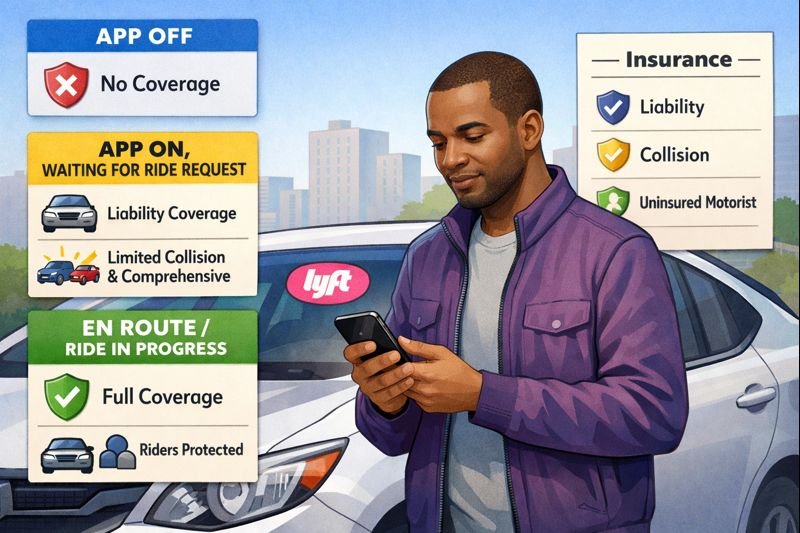
To fully answer what is rideshare insurance and do Uber drivers need it, drivers must understand how Uber’s own insurance coverage works. Uber divides driving activity into three distinct periods:
Period 0: App Off
When the Uber app is off, Uber provides no coverage. Only your personal auto insurance applies.
Period 1: App On, Waiting for a Ride Request
This is the most critical gap. Uber provides limited liability coverage, typically:
-
$50,000 per person for bodily injury
-
$100,000 per accident
-
$25,000 for property damage
There is no comprehensive or collision coverage during this period unless the driver has rideshare insurance.
Period 2 & Period 3: En Route to Pick Up or Transporting a Passenger
Uber provides higher coverage limits, often up to $1 million in liability, along with contingent collision and comprehensive coverage (with high deductibles).
It is Period 1 where rideshare insurance becomes essential.
Do Uber Drivers Legally Need Rideshare Insurance?
The legal requirement for rideshare insurance depends on the state in which a driver operates. However, legality and necessity are not the same.
From a legal standpoint:
-
Many states require drivers to maintain coverage during all app-on periods
-
Some states explicitly mandate rideshare insurance or an equivalent endorsement
-
Failure to comply may result in fines, license suspension, or insurance penalties
From a practical standpoint:
Even in states where rideshare insurance is not explicitly required, drivers still face significant financial risk without it. Uber’s limited Period 1 coverage may not fully protect drivers in at-fault accidents.
Real-World Scenarios Where Rideshare Insurance Matters
To understand the value of rideshare insurance, consider these common scenarios:
Scenario 1: Accident While Waiting for a Ride
A driver is logged into Uber, waiting for a request, and rear-ends another vehicle. Uber’s limited coverage may not cover vehicle damage. Personal insurance may deny the claim due to commercial use.
Scenario 2: At-Fault Accident With Injuries
Medical costs and legal liability can quickly exceed Uber’s minimum limits, leaving the driver personally responsible.
Scenario 3: Policy Cancellation
An insurer discovers undisclosed Uber driving activity after a claim and cancels the driver’s policy entirely.
In each case, rideshare insurance acts as a financial safety net.
Common Myths About Uber and Rideshare Insurance
Myth 1: “Uber Covers Everything”
Uber’s coverage is conditional, limited, and varies by driving period.
Myth 2: “I Only Drive Part-Time, So I Don’t Need It”
Insurance risk is based on exposure, not income level.
Myth 3: “Rideshare Insurance Is Too Expensive”
Most endorsements cost far less than a single uncovered accident.
Understanding these misconceptions helps drivers make informed decisions.
How Much Does Rideshare Insurance Typically Cost?
While costs vary by state, insurer, and driving frequency, rideshare insurance is generally affordable. For many drivers, adding a rideshare endorsement increases monthly premiums by a modest amount compared to the potential financial exposure it prevents.
Cost factors include:
-
Driving history
-
State regulations
-
Urban vs rural driving
-
Frequency of Uber activity
For most drivers, the cost-benefit analysis strongly favors having coverage.
When Should New Uber Drivers Get Rideshare Insurance?
Ideally, before completing the first trip.
Many drivers mistakenly wait until after they start driving to inform their insurer. This delay can result in:
-
Retroactive claim denial
-
Policy violations
-
Higher future premiums
The best practice is to disclose rideshare activity upfront and secure appropriate coverage before going online.
Conclusion: Do Uber Drivers Really Need Rideshare Insurance?
So, what is rideshare insurance and do Uber drivers need it?
From both a legal and financial perspective, the answer is clear.
Rideshare Insurance is not just a recommendation—it is a critical layer of protection for Uber drivers. It bridges coverage gaps, prevents claim denials, ensures compliance with state regulations, and safeguards drivers from potentially devastating financial losses.
For any Uber driver who values long-term stability, legal compliance, and peace of mind, rideshare insurance is not optional—it is essential.