You’ve been driving for Uber or Lyft for three months now. The cash flow feels good—until you lie in bed at 2 AM, staring at the ceiling, wondering: What if my personal policy tells me to get lost after an accident during a ride?
That gnawing feeling isn’t paranoia. It’s the silence of fine print.
Let me walk you through the real cost of rideshare insurance—not the glossy quotes, but the numbers that actually matter.
Why your“cheap”personal policy won’t save you
You bought a beautiful six-month premium for your Honda Civic. $680. Safe driver discounts. Low mileage. Then you started driving for DoorDash.
Here is where things get tricky.
Most personal auto policies contain a little ghost called the livery exclusion. It sits there, invisible, until the moment you file a claim. Then it rises and says: “You were logged in. We owe you nothing.”
That exclusive silence will cost you far more than any rideshare endorsement.
The three phases of risk—and what each costs
Let us break the ride into seasons.
Period 1: App on, waiting for a match. Your personal insurer says “no.” Uber/Lyft provides contingent liability—but no collision for your car. If a red-light runner hits you here? You repair your own sheet metal.
Period 2: En route to pick up. Contingent coverage wakes up a little. But deductibles may land at $2,500. Compare that to your personal $500 deductible. The math stings.
Period 3: Passenger inside. Now the platform’s commercial policy rules. But here is the catch most rookies miss: loss of income is not covered. Your car gets fixed after six weeks. Your rent still comes due.
So what does rideshare insurance actually cost?
A standalone endorsement from a carrier like Progressive or Allstate runs $15 to $45 per month on top of your personal premium. A full commercial policy from someone like Commercial Insurance? Often starts at $200 per month—but it covers Periods 1 and 2 without gaps.
The tax whisper few agents mention

If your rideshare work gets serious and you buy a commercial policy,those premiums become a legitimate business expense on Schedule C. That deduction might save you 15%–25% of the cost at tax time.
But if you buy group coverage through a rideshare association? That premium is often partially taxable as a fringe benefit. You end up handing the IRS money you thought you saved.
You see the irony? Pay less upfront, lose more net.
Three costly illusions drivers bring me
| Illusion | Reality |
|---|---|
| “My personal policy covers me for food delivery.” | Read your exclusions. Most explicitly exclude “carrying persons or property for a fee.” |
| “Uber’s insurance is all I need.” | During Period 1, your vehicle’s physical damage is often uncovered. One cracked windshield = your problem. |
| “I’ll just add a cheap business rider.” | Many online-quoted add-ons exclude rideshare. You need the exact keyword: rideshare endorsement. |
What the seasoned driver does differently
Let me tell you what I have watched work for thousands of drivers in California, Texas, and Florida.
First, you call your current carrier and ask exactly: “Does my policy have a livery exclusion? Will you add a rideshare endorsement for Periods 1 and 2?”
If they say no—and many still do—you shop for carriers that welcome rideshare: Allstate, Farmers, Progressive, and some regionals like Erie or Auto-Owners.
Second, you compare effective deductibles. A $30/month endorsement with a $500 deductible beats a $15/month endorsement with a $2,500 deductible after one incident.
Third, you stop treating this as an extra bill. You treat it as a gatekeeper to keep driving. Because one uncovered accident doesn’t just cost you repairs. It gets your platform account flagged, your personal policy non-renewed, and your rates raised for three years.
The closing question you need to sit with
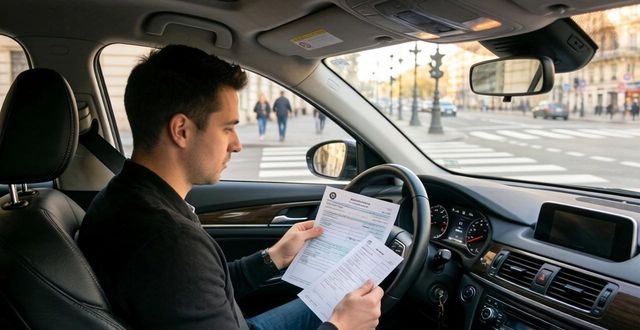
Go look at your declarations page tonight. Find the section titled “Exclusions.” If you see the words “livery,” “public conveyance,” or “carrying passengers for compensation,” you have a quiet time bomb in your glove box.
The right rideshare endorsement is not an expense. It is the cost of continuous sleep.
Drive safely. Carry the right paper. And when a passenger thanks you for the smooth ride, you will smile—because you already know the second half of that sentence is covered.